Reflections from a July morning in Crotona Park, where Hope House celebrated its ribbon cutting.
If you have been following our Flawless blog over the past few weeks, you know we have spent a lot of time in the courts: the treatment courts of Miami-Dade, the science of relapse and recovery, and the long family tree of problem-solving justice. On the morning of July 9th, under the kind of blue, wide-open July sky that makes promises feel keepable, a crowd gathered in Crotona Park in the Bronx: judges and district attorneys, commissioners and advocates, neighbors and friends, and at least one family whose private heartbreak started it all. They had come to watch a ribbon fall. After more than a decade of advocacy, fundraising, setbacks, and sheer determination, Hope House on Crotona Park has finally arrived.
The building is a marvel on its own terms: five stories and 15,000 square feet at the edge of the park, sixteen beds, eight for men and eight for women, with preference given to veterans and to people who were living in the Bronx at the time of their arrest. The residents who will live here belong to a population our justice system has failed for generations, described from the podium as “justice-involved people with serious mental illness.” One message shared by all of the speakers at the ribbon cutting was that this is just the beginning.
As Hope House opens, a parallel milestone and similarly hard-earned victory has been reached a thousand miles south. Following a 20-year campaign by Judge Steve Leifman, this month Miami-Dade approved the Miami Center for Mental Health and Recovery—a 208-bed treatment and diversion facility slated to open next year.
Though different in scale and model, both initiatives share the same conviction: people with serious mental illness belong in care, not cells.
A Father’s Story
The story of Hope House begins with a father. Francis Greenburger is a real estate developer and literary agent who watched his son Morgan move through the criminal justice system until a charge put years of prison time on the table. A prosecutor suggested that a secure treatment facility might serve as an alternative to a cell, if such a facility could be found.
Greenburger went looking and discovered there existed no such alternative. “I found a world where the system administrators were dissatisfied with the outcomes,” he recalled. So he decided to build what he could not find, and in 2014, the Greenburger Center for Social and Criminal Justice was born.
He did not build it alone. The Center’s executive director, Judge Cheryl Roberts who, more than a decade ago, was herself working within the confines of a system better made to “maintain the status quo” than to effect change. It has been estimated that roughly 20 percent of people in our jails and 15 percent of people in our prisons live with serious mental illness, and that an adult with a severe condition is ten times more likely to be in a cell than in a state psychiatric hospital.
Rikers Island and the county jails of Chicago and Los Angeles now hold more people with mental illness than any psychiatric hospital in the country.
It took ten years of advocacy before ground was broken in 2023, and $13 million was pieced together from private donors, New Markets Tax Credits, the City Council, the state legislature, and a $5.6 million grant from New York State. What all of that bought is the first facility of its kind in the nation: a residential alternative to incarceration for adults with mental illness who have been accused of felonies.
A Place of Dignity
No one is sentenced to Hope House. A resident arrives only by way of a plea agreement worked out with their attorney and approved by both the prosecutor and the judge. What waits for them is one to two years of trauma-informed residential treatment, with clinical care provided on site and residential and security staff present around the clock. Everything is under one roof, which Cheryl Roberts counts among the Hope House’s innovations, along with a focus on the infrastructure that keeps people out of the justice system in the first place; the next project, she noted, is a wellness hub. But her summary of the work itself was simpler. “It took a village literally… [the village created] a place of dignity,” she said.
During the ceremony, Roberts thanked judges from across the state, elected officials, and lauded the generous donations from Mr. Greenburger himself. The misconceptions that cling to mental illness in this country followed the project through every stage of its financing and construction, so much so that Roberts shared what one of the project’s financiers told her:
“This is the most difficult closing of my entire career.” Roberts’ formula for getting it done anyway deserves a plaque of its own somewhere in the lobby: “Just build it, don’t ask.”
Hope House is expected to run about $125,000 per resident per year, in the same neighborhood as the $115,000 New York State spends to incarcerate a person, and a small fraction of the more than half a million dollars a year the former City Comptroller calculated it costs to hold someone in a New York City jail.
The difference is what you get for the money: a bed that heals instead of a cell that returns people to the community, worse for the wear.
Why An Elephant?
A short distance from the podium, at the Bronx Zoo, lived an elephant named Happy, who spent some fifty years at the zoo, much of it alone in a small enclosure. Her case became one of the most argued-over questions in American law: whether habeas corpus, the ancient principle against unjust captivity, could be brought on her behalf. In 2022, the New York Court of Appeals said no, over two dissents. One of the dissenters was Judge Rowan D. Wilson, who took the position that the elephant had rights:

“We should recognize Happy’s right to petition for liberty.”
At the Hope House ribbon-cutting, that dissenter, now the Chief Judge of the State of New York, stood in Crotona Park and explained what any of this had to do with the building behind him.
The elephant is the vehicle, he said, but it is really about people. Mental illness is “part of the human condition,” and it has taken society millennia to move beyond barbarism toward a more humane approach to these brain disorders.
What is needed, the Chief Judge said, are “outside resources of a greater variety” to improve the system and to help people heal and lead lives of purpose and recovery. His charge to everyone within earshot was four words long:
“Change something, build something.”
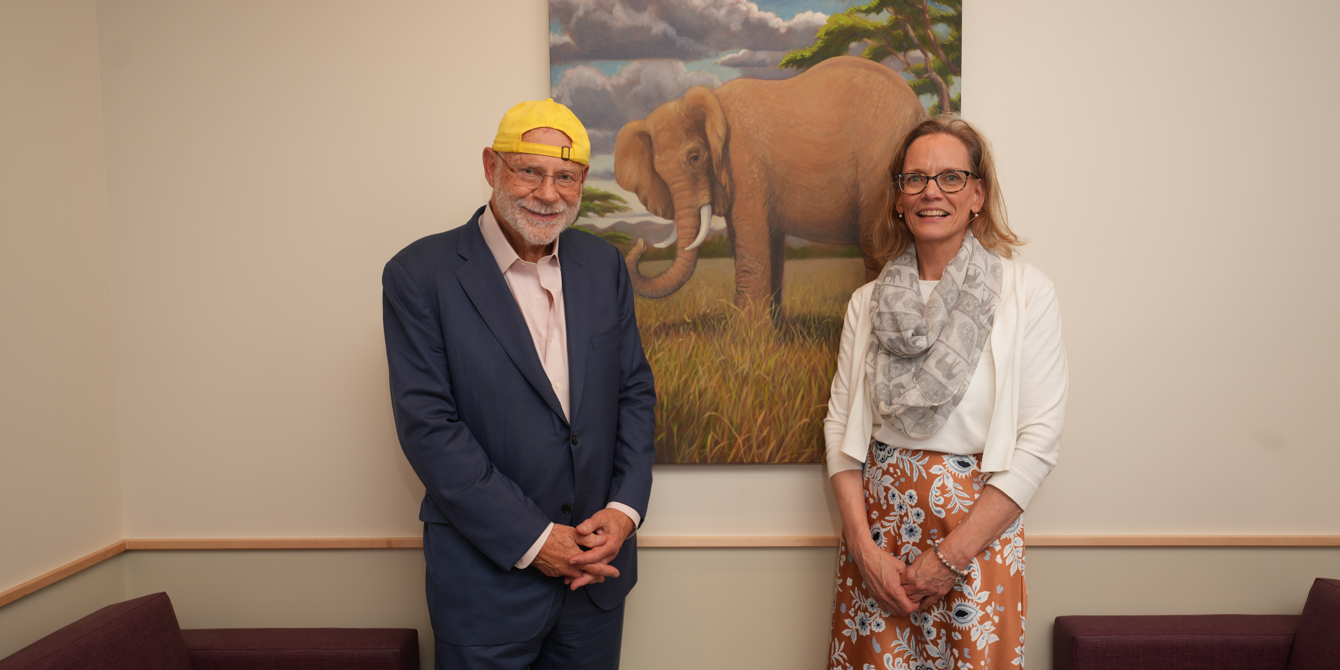
But why is the symbol of the elephant so important for Hope House? Because, as Cheryl Roberts said, the ethos of the elephant is “to leave no one behind.” They travel at the pace of their slowest member, they circle their vulnerable, and they do not abandon their wounded.
The ethos of Hope House is the same: no one left behind, and no one forgotten.
A Chorus for a New Chapter
Commissioner of the New York State Office of Mental Health, Dr. Ann Sullivan, noted that New York State now maintains 51,000 beds for people with mental illness, the largest number of any state in the country, and assured the crowd of the Governor’s support for Hope House.
We were also asked to keep the long view. Bronx Borough President Vanessa Gibson remarked that “as we collectively move forward… we should have an emphasis on re-entry from the beginning.” The building matters, she said, because it reflects our ongoing commitment to “equity, justice, and prevention programs.”
Bronx District Attorney Darcel D. Clark reminded everyone that most of the people living with mental illness in our community right now are held on Rikers Island, and credited Roberts and Greenburger with transforming the vision of how we treat and take care of people, speaking of individuals who are “far better served staying at a place like Hope House” than behind bars. The day, she said, was “not just the opening of a new building, it’s the start of a new chapter.” Manhattan District Attorney Alvin Bragg described Hope House as a “third lane” that the judiciary can now assign to people who are justice-involved best suited to its treatment environment.
Renita Francois, Deputy Mayor of Community Safety for New York City, told the crowd that accountability and compassion are not opposites, and that “community safety and human dignity go hand in hand.” Department of Correction Commissioner Stanley Richards, who now runs the city’s jails and was once incarcerated in them, called this moment an incredible challenge and an incredible opportunity. The ribbon cutting of Hope House amazed him, he said, because “people like you dared to care,” and that kind of caring has the ability to change not only our justice system but maybe even our world.
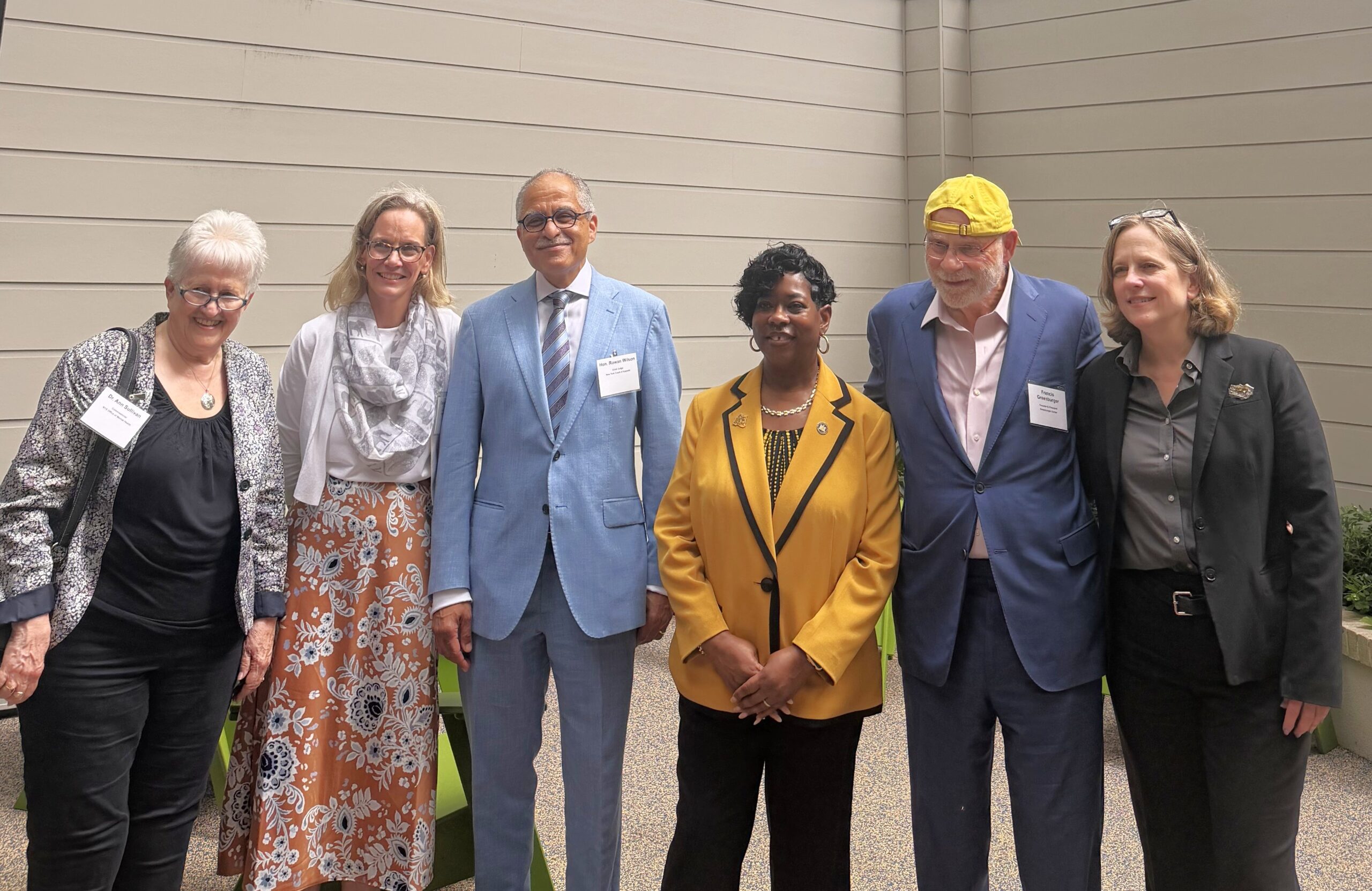
Where the Elephant Stands
During the ceremony, one speaker offered a definition of the word the building wears on its front: “Hope… combines a personal desire with the expectation that a good outcome will occur.”
Hope is not wishing, nor is it optimism on autopilot; it requires the belief that a good outcome is genuinely possible. For a person standing in a courtroom with mental illness and a felony charge, that belief has been, for generations in this country, almost impossible to hold. Sixteen beds in the Bronx will not restore it. But herds move one member at a time.
As the speeches ended, a cloth was drawn back from a painting of an elephant, which now hangs in the entryway of Hope House. The first thing a resident will see on the day they arrive, a person whom long experience has taught to expect abandonment, is the face of the animal that famously never leaves anyone behind.
We spent the walk out of Crotona Park thinking that this is what belonging looks like when a community takes it seriously enough to pour a foundation under it.
At Flawless, we have always believed that no one should be punished for their brain chemistry, and that healing either happens in community or it doesn’t happen at all. Yesterday, the Bronx built that belief into Hope House. May the people who come to live there find everything its name promises, and may the rest of us take the Chief Judge’s charge personally:
“Change something, build something”.