Here’s What the Data Says…
Mental health policy debates often focus on access and affordability. Those gaps are real, but they sit on top of something deeper: a system that has never treated brain health as a legitimate medical priority, and that has consistently failed the people most in need of it. Five fault lines show where the system breaks.
1. Insurance parity remains a promise, not a reality
The Mental Health Parity and Addiction Equity Act has been law since 2008. It requires insurance companies to cover mental health and substance use disorders on the same terms as any other medical condition. The gap between law and practice remains enormous. According to The Kennedy Forum, Americans are more than 10 times more likely to go out of network for mental health care than physical health care. Kennedy Forum data also show that mental health providers are paid between 16% and 59% less than physical health providers across the country’s four largest commercial insurance networks, a structural disincentive that keeps qualified clinicians out of insurance networks and pushes patients into out-of-pocket costs they cannot afford.
The funding gap at the federal level tells the same story.
The National Institute of Mental Health received approximately $2.5 billion in the FY2025 budget. The National Cancer Institute received $7.2 billion in FY2024. The brain is an organ. The investment has not been treated like one.
2. The mental health system routes people to jails and prisons
When the mental health system fails to reach someone in time, another system fills the gap.
Approximately 64% of people in county jails and 54% in state prisons have a mental health concern, according to data from the Department of Justice and Bureau of Justice Statistics.
Jails and prisons were not designed as mental health facilities. They do not have the clinical infrastructure to function as one. The people cycling through those systems are, in most cases, people the mental health system did not reach before a crisis.
Judge Steve Leifman spent 25 years building an alternative in Miami-Dade County. His approach starts before arrest: Crisis Intervention Team training teaches officers to recognize someone in psychiatric crisis, de-escalate, and connect the person to care. Miami-Dade now has the largest trained CIT squad in the country, with more than 9,500 officers across all 36 of its police departments.
Annual arrests dropped from 118,000 to 53,000. The jail population fell from 7,400 to 4,400. The county closed one of its three main jails, saving an estimated $239 million. Misdemeanor recidivism dropped from 75% to 20%.
These are not projections. They are documented outcomes from a system that treated mental health as a public health problem rather than a criminal one.
3. Crisis response sends the wrong responder
A mental health crisis is a medical event. In most of the country, the default response is a police car.
According to the Treatment Advocacy Center, people with untreated mental illness are 16 times more likely to be killed during a police encounter than other civilians.
The 988 Suicide and Crisis Lifeline, launched in 2022, was a meaningful step. The infrastructure to dispatch mobile crisis teams instead of armed officers is still being built. The right to a non-violent medical response during a psychiatric crisis is not yet guaranteed to all.
4. Race determines who gets care and what care looks like
Among adults with any mental illness, Hispanic adults (44%) and Black adults (39%) are far less likely to receive mental health services than White adults (58%), according to 2024 KFF data.
The barriers compound: cost, limited availability of culturally competent providers, and a well-founded mistrust of a system with a documented history of misunderstanding.
That history includes diagnostic bias. Research consistently shows that Black Americans with depression are far more likely to be misdiagnosed with schizophrenia, a pattern documented in studies from Rutgers, the University of Michigan, and Dell Medical School. Clinicians over-emphasize psychotic symptoms in Black patients and under-weight mood symptoms, steering diagnoses toward schizophrenia rather than the depression or bipolar disorder that would be more accurately treated with mood stabilizers. An incorrect diagnosis means incorrect treatment which means worse outcomes.
Suicide rates among Black youth ages 10 to 24 increased by 37% between 2018 and 2021, the largest increase of any racial group in that period, according to SAMHSA.
These are indicators of a system that is not reaching the people who need it most.
5. Language shapes who asks for help
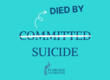
The word “mental” is still used as a slur. “Bipolar” is still used to describe the weather. This casual dehumanization creates a ceiling for people with brain health challenges, preventing them from seeking employment, housing, and community support. Unlike most physical conditions, mental health diagnoses can often be treated as character flaws rather than medical facts.
Real progress requires a shift in how we talk about brain health.
When a person experiencing a psychotic episode receives the same dignity as a person having a heart attack, something fundamental will have changed. Until then, the language itself is a barrier to care.
What comes next
Mental health is health. The right to care, to an accurate diagnosis, to a medical response in a medical crisis: these should not be considered special accommodations. They are the baseline of an equitable system. The data shows how far the current system falls short. The work happening in Miami-Dade shows what is possible when a community decides the gap is not acceptable.
Vote with that in mind. Spend your time and resources on organizations closing the gap. Ask the mental health system in your community who it is not reaching, and why.