Miami-Dade didn’t just join the movement to treat mental illness as health problems instead of crimes. It started it. Back in 1989, Miami-Dade opened the first drug court in the nation, betting on the idea that people struggling with substance use deserve treatment and accountability instead of a jail cell. That model has since spread to thousands of courts across the U.S. and around the world. The county kept building, launching its Criminal Mental Health Project in 2000, now widely considered the national model for decriminalizing mental illness. And the numbers back it up. Recidivism among the county’s misdemeanor population dropped from 75% to 20%, and among the felony population from 75% to 6%. Annual jail bookings fell from about 118,000 to 53,000. The average daily jail population went from roughly 7,200 down to 4,200, enough that the county actually closed two jails and saved taxpayers millions. Miami has, and continues to, be a trailblazer in brain health treatment and justice reform.
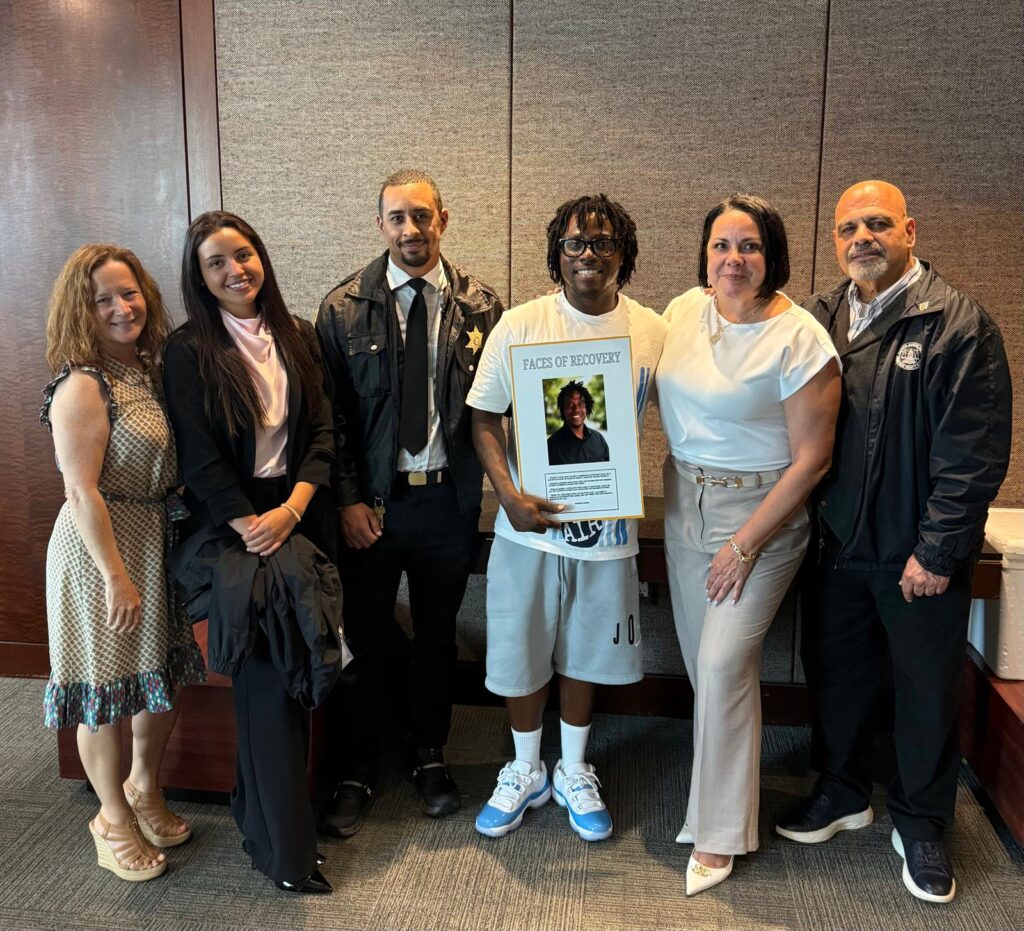
Recently, the Flawless team had the amazing opportunity to send multiple representatives to Miami-Dade County’s first annual problem-solving courts community partnership event at the 11th Judicial Circuit.
Our new readers may be asking, though, what is a problem-solving court? The idea behind it is pretty simple. When someone’s struggling, the answer should be help, not punishment. These courts, which include drug courts, mental health courts, and veteran’s courts, exist for the people who often slip through the cracks of the regular system. Instead of treating a medical crisis like it’s a crime, they connect people to treatment and a community that shows up for them. Recovery from addiction or serious mental illness is never a straight line but that doesn’t mean it’s not possible. As was echoed many times at the event, this work is about progress, not perfection.
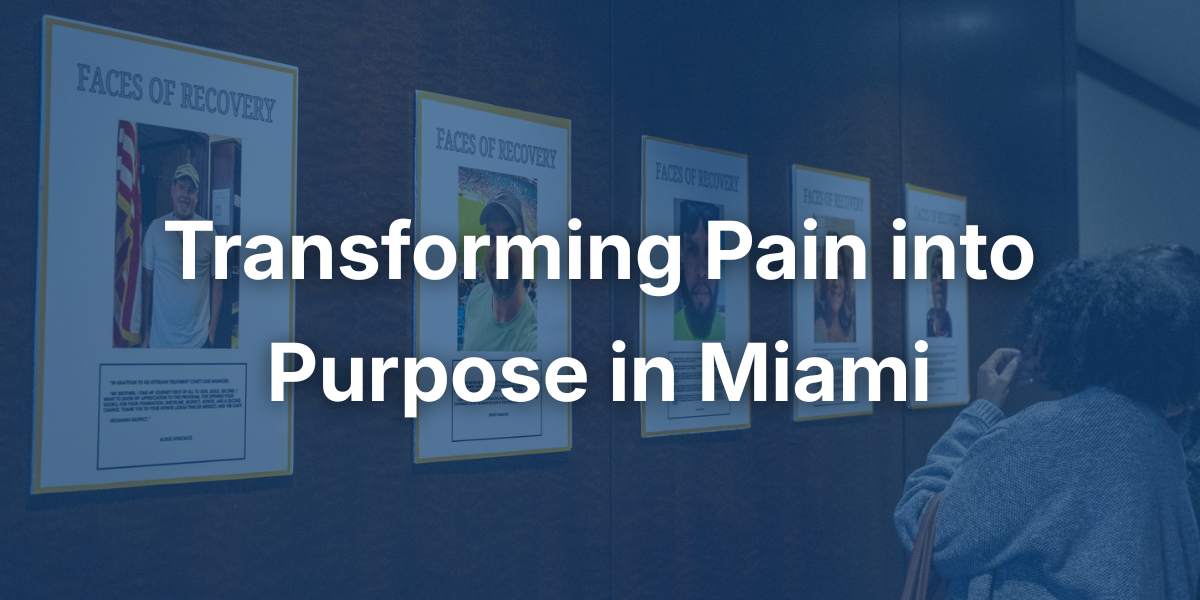
The event was built around what keeps recovery going. Relationships, resources, and hope. Resource tables ran the length of the room, staffed by community partners offering services from housing and job support to counseling. The heart of the afternoon was the people who’ve lived that journey and who spoke with us. The Faces of Recovery exhibit lined the walls, and one by one, participant speakers got up in front of the room to tell their stories. One speaker echoed the message of the whole event when they said that the most important word in their life now is “change.”
Speaker after speaker described that same principle in their life, each in their own way. One of them said how, “I have been able to turn my pain into purpose.” And that purpose for the speakers was almost always pointed outward to those still caught in the web of addiction. This work is brave and important. As another speaker said, “I let others who are struggling know that I have been there, and they are not alone.”
That’s the central idea of peer support, also highlighted at the event. The person who’s already walked that path of healing is often the one best equipped to walk with someone else through theirs. Hope is a shared enterprise for peer supporters and those still in recovery. Maybe the most powerful thing anyone said all afternoon was also the simplest. One speaker boiled an entire recovery down to one generous sentence. “If I made it through, anyone can.”
That belief that people can make it through is the foundation from which these courts are building. It’s why the resource tables matter, why peers keep showing up, and why a courthouse opened its doors for an afternoon of connection and hope. The message to use is simple: Healing is possible, and with it, change.
Gatherings like this mark community progress, but that is not all they do. They keep the enterprise which allows this progress going. Every conversation between a provider and a partner, every resource that changes hands, every story told from the front of that room—it strengthens the system of care that keeps people out of cells and on their own journey of recovery. Miami-Dade has shown what happens when a community decides to see its most vulnerable people through a lens of compassion instead of judgment.
To every participant who shared their story, and to the partners who keep making recovery possible in this incredible community, thank you for having us this Wednesday. We can’t wait to see what you do next, Miami! We have our eyes on you, and not only because the world cup is coming to town this summer ☺
With much love, you are all flawless—
Best,
The Flawless Team