
Help Instead of Jail for our Neighbors
In the United States, jails and prisons have become the largest, de facto mental health providers. Facilities like New York’s Rikers Island, Los Angeles’ Twin Towers Jail, and Chicago’s Cook County Jail hold more patients with serious mental illness than any state hospital. Here in South Florida, the Miami-Dade County jail has roughly as many psychiatric beds as all the civil and forensic hospitals in Florida combined.
Despite being the largest so-called “providers”, roughly two-thirds of people with these disorders in jails and prisons do not receive any treatment.
March is Criminal Justice Awareness Month, and it is the perfect time to share an incredible resource being opened in Miami: The Miami Center for Mental Health and Recovery, a project that represents a turning point in how our society treats its most vulnerable members.
I began my career in correctional law enforcement with the Florida Department of Corrections and the Broward Sheriff’s Office. I have stood in those hallways and seen the faces of men and women who belonged in a treatment center instead of a jail cell. In the corrections system, law enforcement is often asked to serve as social workers, therapists, and doctors, roles they aren’t equipped for, nor should it be their responsibility.
Beyond the badge, my own family’s experiences with the corrections systems have shown me the cracks that people fall through.
I know the exhaustion of advocating for a loved one in a system that is designed for punishment, not healing.
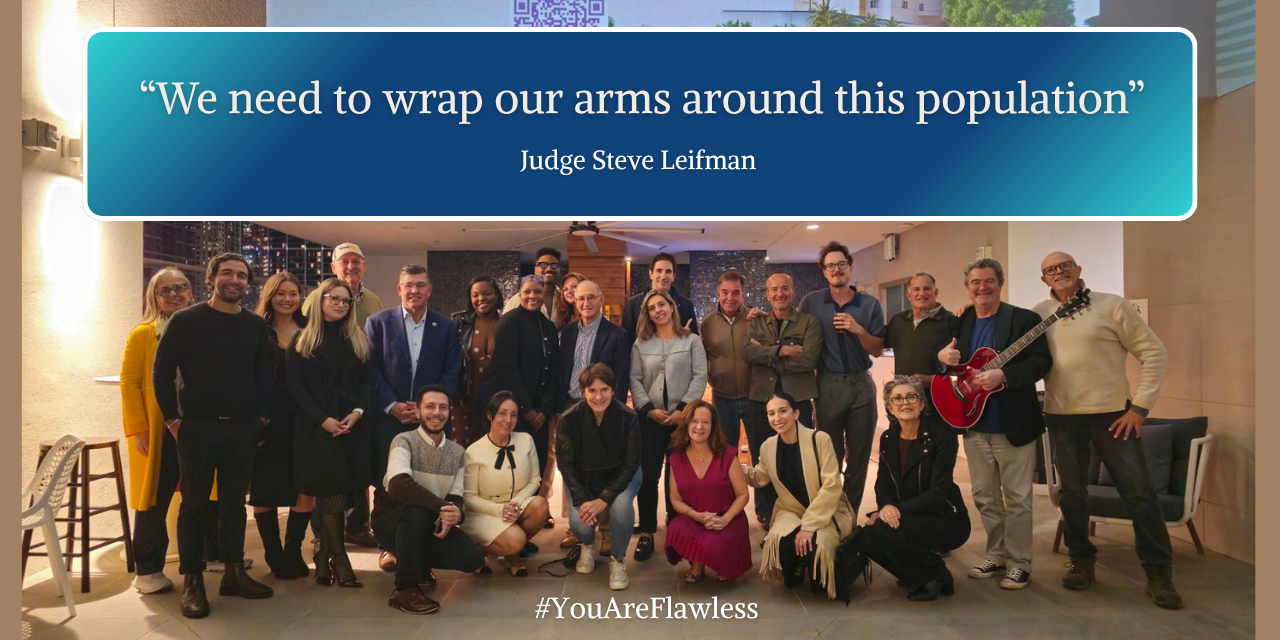
But there are evenings that give you hope and stay with you long after the last light fades. A recent night in Miami was one of them. The Rooftop Soiree celebrated Judge Steve Leifman, who has facilitated groundbreaking work in mental health and criminal justice reform. There was a sense of urgency mixed with profound optimism. We were there to stand behind the Miami Center for Mental Health and Recovery, a project that represents a turning point in how our society treats its most vulnerable members. When it opens, this innovative facility will provide a comprehensive, coordinated system of care for people with mental illness who currently just cycle through the criminal justice system. The 181,000-square-foot sanctuary will be a one-stop shop for dignity and healing, where crisis stabilization, primary medical care, and job training coexist with other services.
It’s a model that moves us away from the blunt instrument of incarceration and toward the precision of integrated care.
Judge Leifman brought together a community united by a singular, powerful vision: transforming the landscape of mental health care in Miami. I wish a resource like this had existed back at the beginning of my career.
What Judge Leifman has created will change the lives of those in our community. It’s an example of what every city should have.
We always feel the power of meaningful change when we gather with Judge Leifman, who shares our philosophy at the Flawless Foundation, of looking at the most disenfranchised among us through the lens of hope and compassion. The support was palpable among sponsors, leaders from many sectors that serve people lost in the system, and everyday citizens who refuse to accept the status quo.
As a city, Miami has the building, the vision, the strategy, the community, and the momentum.
It’s truly time to open this facility and radically change the way we treat people in our community who have been forgotten.
The Miami Center for Mental Health and Recovery is a national model that offers a promise that we will no longer mistake a medical crisis for a criminal one. Let’s turn the key and let the healing begin.
Written by Dr. Robin Jones. Jones is a longtime special needs and mental health advocate who is currently Director of Strategy and Innovation at The Flawless Foundation.