We Lost the Filmmaker. Let’s Not Forget His Cause.
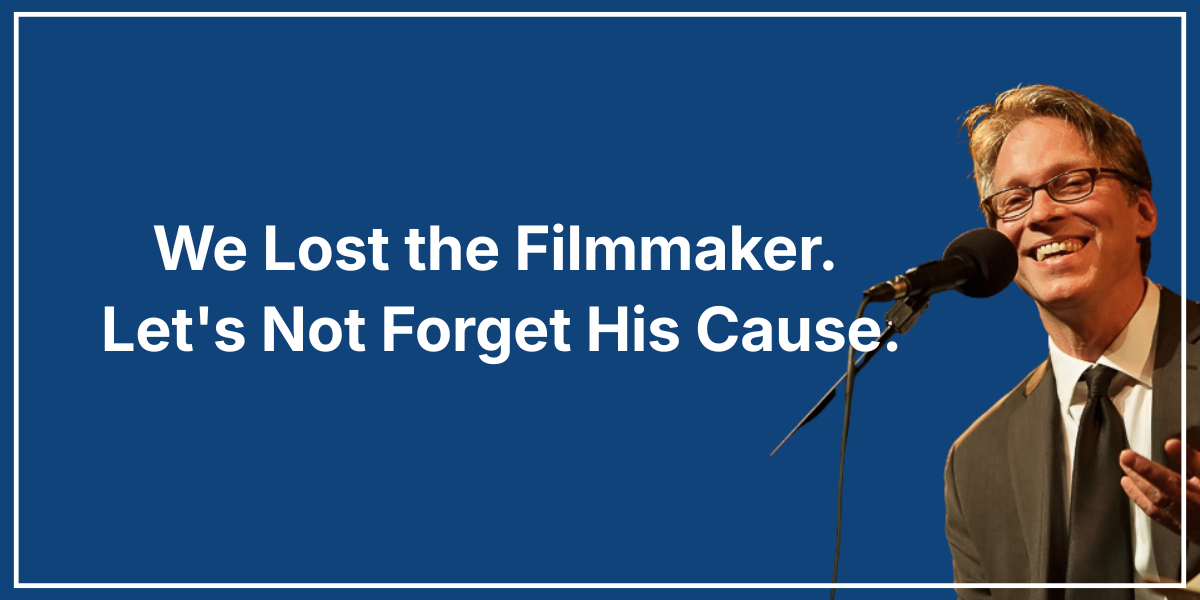
The mental health advocacy community has lost a quiet giant. Brian Lindstrom was a Portland, Oregon-based documentary filmmaker who devoted his career to telling the stories of people living with mental illnesses and the consequences of a judicial system that too often criminalizes them. He described his subjects as people ‘society puts an X through’ and spent forty years working to erase that X, one film at a time. The country he leaves behind is more humane for his having been here.
This loss is deeply personal to me. Almost twenty years ago, I founded the Flawless Foundation in Portland. Flawless was built on a simple yet radical premise: to see the light and perfection in everyone, especially those whom society has cast aside. During the years that I was building our organization’s footprint in the Pacific Northwest, Brian was across town, championing the same vision through his camera lens. We were advocates working in the same corner of the world and we shared a deep commitment to never looking away from our most marginalized neighbors.
His groundbreaking documentary, Alien Boy: The Life and Death of James Chasse, chronicled the tragic story of a man who lived with schizophrenia and was killed while in police custody. I was living in Portland when James Chasse died in 2006. In the years that followed, that human rights violation shook me to my core. It unfolded in our own backyard, laying bare the true stakes of our work.
What Brian achieved by capturing the full breadth and beauty—flaws included— of James’ life is everything we aspire to. He refused to let James be reduced to a clinical diagnosis or the horrific circumstances of his death.
Instead, Brian showed the audience a prolific artist, a son, a friend, a whole human being who happened to be living with a serious mental illness, and who lived in a country that had no safety net for him. Watching him channel that collective trauma into a force for systemic healing shaped my own path as an advocate.
Our judicial system too often substitutes punishment for treatment.
As a result, people living with mental health conditions are denied the care they need and instead funneled into jails and prisons, where mental health support is scarce or nonexistent.
Brian’s work helped change this narrative. His films were part of the reason Portland began training its officers in crisis intervention, proving that when we refuse to look away from our most vulnerable, real systemic change becomes possible. He didn’t make films about suffering; he made films about people’s capacity to endure and to recover.
Watching Brian’s impact unfold over the years deepened my own passion. His work reminded me that we are not alone in navigating the wilderness of human suffering. His art gave voice to a truth we both held close: that brain disorders are never a character flaw, and that a person is never defined by the hardest thing they have ever faced.
We can follow Brian’s example by continuing these vital conversations — with judges, with police officers, and with the people closest to us.
In his honor, we will keep standing up for those cycling through the mental health and justice systems, challenging a status quo that criminalizes what are, at their core, medical conditions. And we will meet every person we encounter with openness and compassion.
Let us carry these conversations forward until meaningful change reaches every neighborhood, every city, and every corner of this country.
Brian said of his films, “It is my small way of honoring them.” Now, it is our turn to honor him.
We hold Brian’s family—his wife Cheryl Strayed and their children Carver and Bobbi—in our hearts. The greatest tribute we can offer him is not just a memorial but a commitment: to keep doing the work he gave his life to.