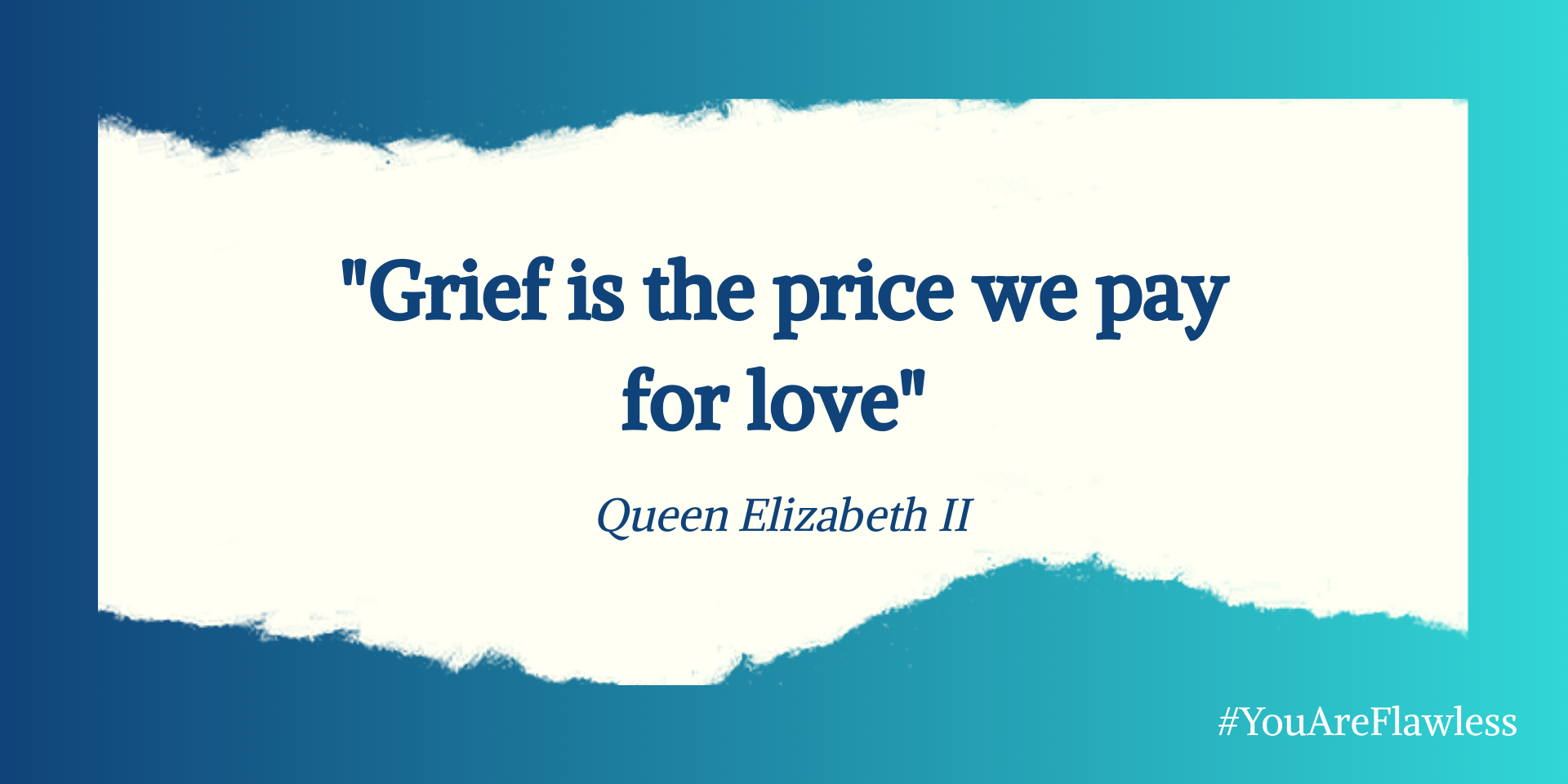
Grief is something every person will experience, yet it remains one of the hardest things to talk about openly. Many people associate grief only with the death of a loved one. While that type of loss is profound, grief is far more complex and reaches into many areas of life that are often overlooked.
People grieve when chapters close, when life shifts unexpectedly, or when something meaningful changes. You can experience grief after losing a job, a friendship, a home, a sense of identity, or a dream you had for your future. It can arrive quietly or suddenly. Some days it feels distant, and on others it can feel overwhelming.
At Flawless, we honor all emotions and know how important it is to “Feel it to heal it”. Our blog is meant to be something you can return to whenever you need a reminder that grief is valid in all its forms, and that you are never alone. (even though it might feel that way)
What Grief Really Is
Loss happens to everyone and grief is a natural response. It does not follow a timeline, and it does not look the same for everyone. You do not “get over” grief; instead, you learn to live with it in a way that honors what you lost and supports who you are becoming.
Grief can come from:
- Losing someone you love
- The end of a relationship or friendship
- A major life transition
- A change in health
- Losing stability, routine, or a sense of safety
- Letting go of a dream or future plan
- Any moment that reshapes the life you knew
If it mattered to you, grieving its loss is real and understandable.
Why Talking About Grief Matters
Many people stay quiet about their grief because they do not want to seem “weak” or feel like they are burdening others. Some try to rush themselves through it, believing they should be further along than they are. Others hide their grief because they worry it is not “big enough” to count.
But grief deserves to be acknowledged, privately or with others, because naming what hurts is often the first step toward healing. Talking about grief creates room for honesty, connection, and support. It helps reduce the isolation people often feel and reminds us that we are not meant to handle loss alone.
Even learning about grief, listening to others’ stories, or reading about the experiences of people who have walked a similar path can provide comfort and clarity.
Helpful Resources for Navigating Loss
Here are a few thoughtful, reliable places to turn when you or someone you care about needs guidance or support:
Our Flawless Blog
A space where we share insights, stories, and resources focused on mental health, well-being, and personal growth. Here is a blog we wrote about grief.
Anderson Cooper’s “All There Is” Podcast
A deeply personal series where Anderson Cooper reflects on his own grief and speaks with others about the losses that shaped their lives. It is honest, heartfelt, and comforting to listen to.
David Kessler’s Work on Grief
David Kessler, one of the most respected voices in the field of grief, offers practical tools, compassionate teachings, and meaningful guidance for people who feel overwhelmed or unsure of their emotions.
The Dougy Center
An excellent resource for children, teens, families, and anyone looking for approachable grief-support materials. The Dougy Center also shares a curated list of “The 16 Best Books About Dealing with Grief,” which can be helpful for people at any stage of loss.
The National Alliance for Grieving Children (NAGC)
A trusted organization offering education, support programs, and resources for communities seeking to understand and support people who are grieving.
A Gentle Reminder
If you are grieving right now, whether your loss is recent or something you have carried for a long time, your feelings are valid. Your pace is your own. Some days may feel heavy, and others may feel lighter. Both are part of the process.
If someone you care about is grieving, you do not need perfect words. Presence, patience, and compassion often mean more than anything else.
Grief does not disappear on a schedule, and it does not define you. Over time, with support and understanding, people learn to carry it in a way that honors what was lost while making space for what is still ahead. Don’t forget to be gentle with yourself and remember that You Are Flawless!
Written by Makayla Bynes, Intern at Flawless Foundation