
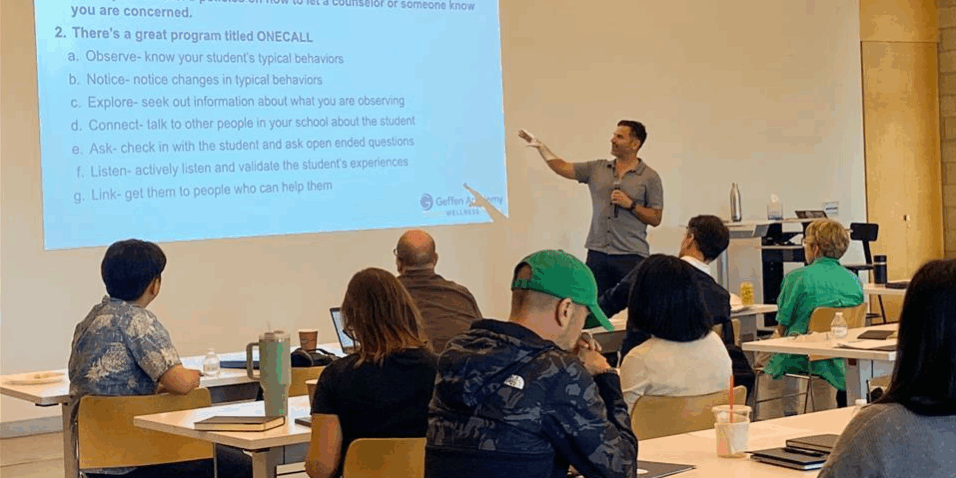
Our Flawless Board Member Ross Szabo is the Wellness Director at Geffen Academy UCLA. He regularly gets emails and offers to address all of the crises affecting young people. Schools are constantly asking him how to address technology, AI, social media, mental health, the dangers of porn, loneliness, young men’s masculinity, bullying and many other issues.
Ross shares that the answer to all of this isn’t easy. It takes a lot of investment from schools. However, it is possible to create an environment that allows schools to be proactive in establishing a culture to address these things instead of being forced to react to these issues as they arise. This is something he teaches at their Mental Health Education Institute that takes place this week.
Here are some steps schools can take:
- Professional Support: There are many organizations like the Jed Foundation that guide schools and school districts on the types of support schools need with counselors, psychologists, social workers, learning specialists and other types of support for students. these types of support are critical in providing the types of therapy or interventions that kids need. Many public school districts have been able to provide these supports by being creative in how they work with their community.
- Health Education: Having a class that teaches students about mental health on a regular basis allows schools to provide the information and skills that students need to navigate crises. The repetition of these classes also helps normalize mental health, so that when there are new issues like AI, masculinity etc., then the class can talk about those new challenges instead of having to do one off programs.
- Trusted Adults: All teachers can be trusted adults. One step in being able to create that dynamic is some training on how teachers can use personal stories to create responsible relationships. Connection and a sense of belonging are two of the largest factors in deterring suicide and destructive decisions. Teachers need to be supported with tips on how they can take care of themselves and be there for others. Mental health education can happen in every classroom when teachers are developing trust with students.
Visit Ross’ website to learn more about his work