
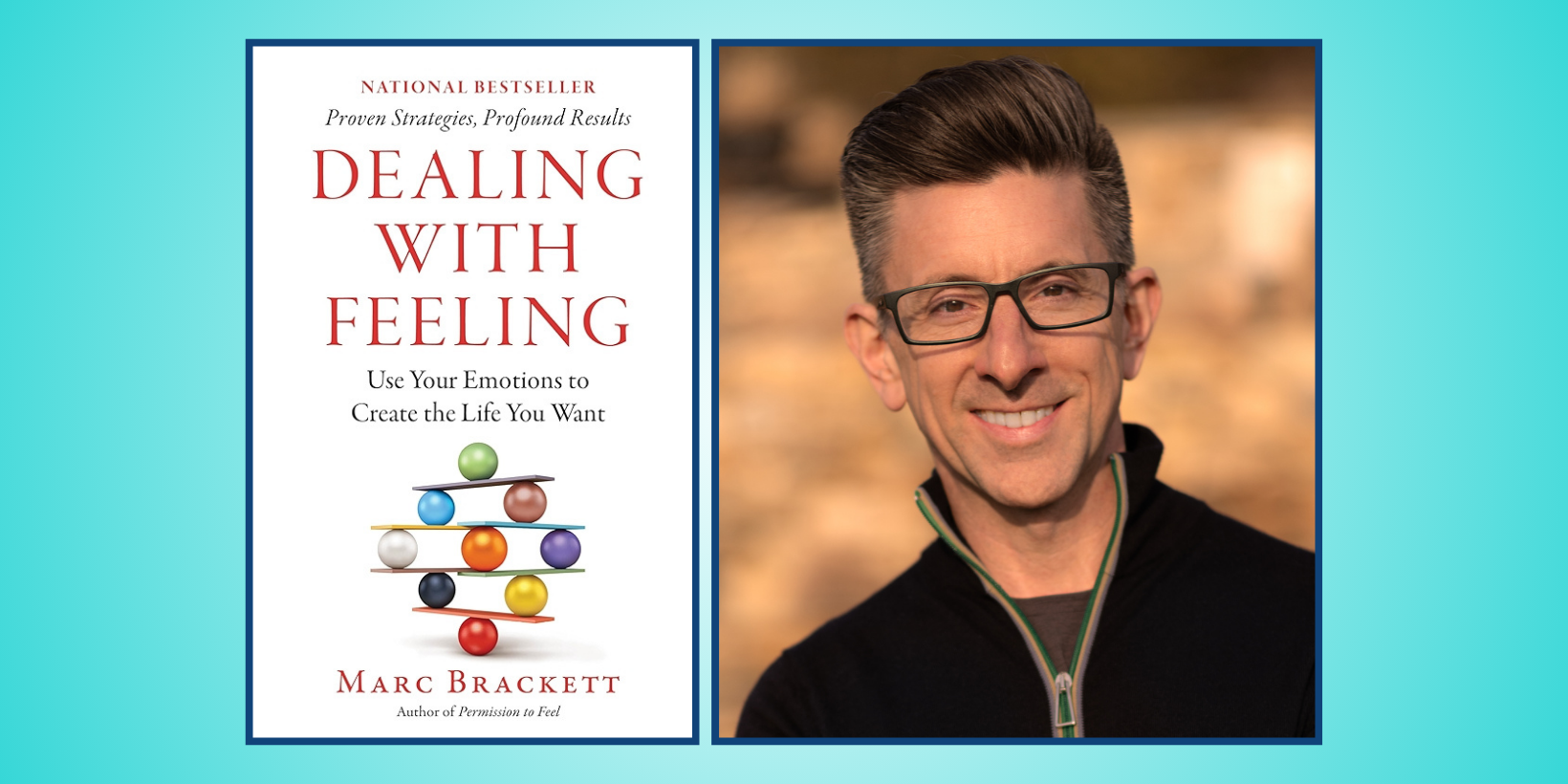
Use Your Emotions to Create the Life You Want
Book Review by Consultant Abby Cooper
In his new book, Dealing with Feeling: Use Your Emotions to Create the Life You Want, Marc Brackett, Ph.D., invites readers to rethink emotions not as distractions or weaknesses, but as valuable information that can shape our choices, deepen our relationships, and help us create lives filled with greater meaning and well-being.
Rather than viewing emotions as obstacles, Brackett encourages us to see them as valuable information that can guide us toward healthier choices, stronger relationships, and greater fulfillment.
Marc Brackett is the founding director of the Yale Center for Emotional Intelligence and a professor in the Child Study Center at the Yale School of Medicine. For more than two decades, he has researched how emotions influence our learning, decision making, creativity, health, and performance. He is also the author of the bestselling book Permission to Feel and the co-creator of the Apple award-winning How We Feel app, developed with Pinterest co-founder Ben Silbermann, which helps users label and understand their emotions in everyday life. His work emphasizes that our emotional lives are not side stories to our success or well-being; they are central to them.
A key idea in Dealing with Feeling is that our emotions themselves are not the problem.
We will all experience happiness, sadness, anger, fear, disappointment, and joy, and none of these feelings are “wrong.” What truly shapes our lives is how we respond to our feelings. Brackett explains that emotional intelligence is not about forcing ourselves to be happy or ignoring difficult emotions. Instead, it is about recognizing emotions as they arise, understanding what they mean, and choosing responses that help rather than harm the people around us, including ourselves. Unfortunately, most of us were never taught how to do this. Few people report learning emotional skills at home or school, even though emotional challenges and mental health concerns are increasingly common across the globe.
Brackett also helps readers understand the language of emotion more precisely. He differentiates between affect, emotions, feelings, moods, and emotional dispositions, each representing a slightly different aspect of our inner world. This matters because vague self-awareness often keeps us stuck, while specific emotional vocabulary opens pathways to healing.
Just as a doctor needs to know what kind of illness you have before prescribing treatment, we need to be able to name what we feel in order to support ourselves effectively.
Tools such as his Mood Meter and the How We Feel app encourage people to move beyond saying “fine” or “stressed” and instead identify emotions with clarity and compassion.
Another powerful theme in the book is emotional regulation, or the ability to move from automatic reactions to intentional responses. Strong emotions can push us toward words or behaviors that we later regret, while thoughtful regulation helps us slow down, breathe, and choose differently. Brackett describes a fast “hot” emotional system that reacts impulsively and a slower “cool” system that allows for reflection and self-control. Stress often pulls us into the hot system, while mindfulness, breathing practices, and emotional awareness help us access the cooler, more deliberate side of ourselves. He also offers practical strategies summarized in the acronym PRIME: preventing unwanted emotions when possible, reducing them when they arise, initiating helpful emotions, maintaining supportive emotional states, and enhancing positive experiences when we can.
The hopeful message throughout Brackett’s work is that emotional regulation is not an inborn talent possessed by some and lacking in others. It is a teachable, practicable skill set that can be developed across a lifetime.
Research-backed strategies include accepting emotions rather than judging them, labeling emotions accurately, calming the body through breathing and mindfulness, reframing unhelpful thought patterns, caring for sleep and physical health, and seeking connection with others.
Mindfulness practices woven into daily routines help strengthen emotional awareness so that, in challenging moments, we can pause and respond rather than react automatically.
Connection also plays a major role. Brackett emphasizes healthy co-regulation, where we support someone else’s emotional experience while also caring for our own. This doesn’t mean tough love, constant venting, or trying to fix another person’s problems right away. Instead, it looks like curiosity, empathy, warmth, perspective, and true listening. Many people can think of an “Uncle Marvin” figure in their own lives, the type of person who gives permission to feel without judgment. Brackett reminds us that becoming that supportive presence for others benefits everyone involved, and research shows that close social relationships strongly protect both physical and mental health.
Just like any meaningful change, emotional skill-building grows over time, with patience and practice. The book highlights the importance of setting clear goals, sharing them with supportive people, focusing on progress instead of perfection, making practice enjoyable, and celebrating small wins along the way.
Habits of emotional awareness and regulation take repetition to develop, but they create space for healthier relationships, stronger coping skills, and more intentional living.
At Flawless Foundation, we deeply resonate with Marc Brackett’s message.
Emotional intelligence is not a luxury or an optional add-on to life; it is foundational to well-being, learning, justice, and human connection.
Many people were never formally taught how to deal with their feelings, but it is never too late to learn. By noticing, naming, and navigating our emotions with greater care, we don’t just improve our own lives: we help build more compassionate communities where everyone has permission to feel and the tools to heal.