
Language has power.
It can isolate or empower. By leveraging communications and digital platforms, we intentionally shape conversations about brain health to replace stereotypes with knowledge and myths with truth. Our work at Flawless Foundation centers on advancing informed perspectives around mental health in ways that are accessible and impactful.
This message from our advisory board member, John Puls, LCSW, MCAP, immediately caught our attention. We’re sharing his important perspective on bias, mental health treatment, and the critical need for qualified mental health expertise in legal settings.
In his LinkedIn Post John highlights a disturbing exchange (read the original article) where a Florida judge reportedly told a defendant they “don’t need” their prescribed psychiatric medications, dismissively labeling treatment for a psychiatric condition as “bipolar crap.”
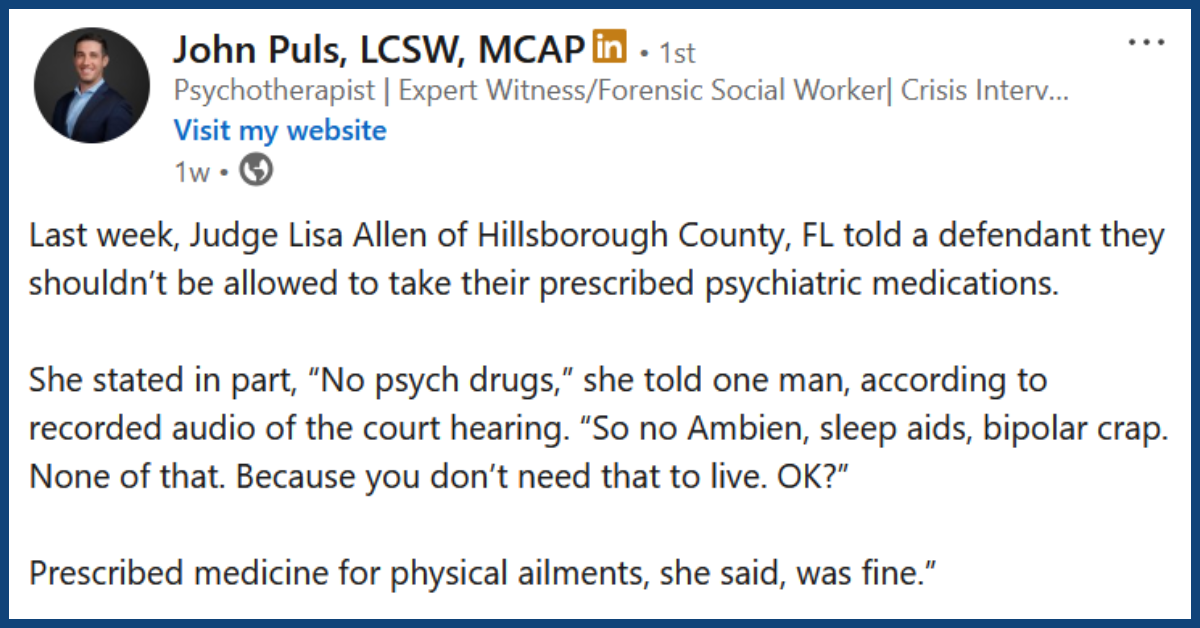
*Images are screenshots from John Puls’s LinkedIn Post.
As John poignantly points out, we would never expect a judge to adjust a defendant’s insulin dosage or dictate their chemotherapy schedule. Yet, in the realm of behavioral health, unqualified opinions are often treated as valid critiques.
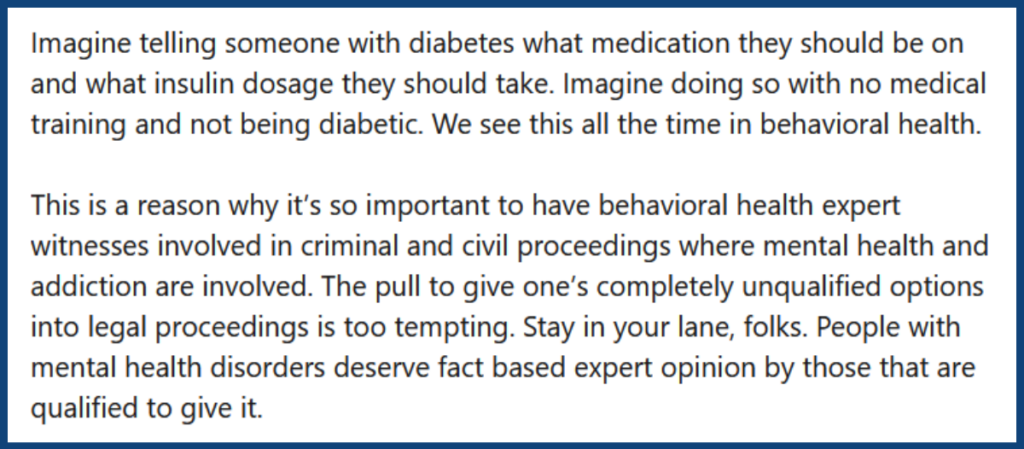
*Images are screenshots from John Puls’s LinkedIn Post.
At Flawless, we believe that brain health is health. This means acknowledging that:
- Diagnosis and treatment are the exclusive domains of trained medical and mental health professionals.
- Lived experience and clinical data must inform how the legal system interacts with individuals with SMI (Serious Mental Illness).
- Expert witnesses are not just a luxury in the courtroom; they are a necessary safeguard against the personal biases of those on the bench.
We are grateful for thought leaders like John Puls who use their platforms to say “stay in your lane” to those who would offer unqualified medical advice. People living with mental health challenges deserve more than derogatory labels; they deserve dignity, fact-based care, and a legal system that understands that the brain is an organ in the body just like any other organ.
We’d love to hear from our community: What safeguards should be in place to ensure that mental health treatment decisions remain informed by qualified clinical expertise?